The argument for waiting till January to fundraise
Why Thanksgiving to New Year’s is a no go for fundraising, and how I’d use the time instead
Here is my standard advice for the best times of the year to fundraise…
While most people are waiting for the new year to kick off a fundraise, you really shouldn’t raise in January because it’s the most competitive month for raises.
February should also be skipped because ski week hits the private schools in Marin County and Valentine’s Day is right in the middle of the month, so that’s choppy.
March is spring break, so half the partners are on a beach somewhere with their kids.
April has Easter and Passover, and May is packed with graduations and everyone counting down to summer.
June has summer Fridays, July has the Fourth, and August is when the whole venture world disappears to Tahoe or Nantucket.
October is when every founder who waited for fall floods the market while VCs are preoccupied with kid Halloween costumes.
And finally… from Thanksgiving through Christmas and until the end of the year it’s the death zone.
So.
The best and only time to fundraise is September 12 to September 29.

This is obviously a joke.
There’s always a reason for why now isn’t the optimal time.
So when founders ask me when is the best time to raise, after I share the joke above, my real answer is that optimizing the month on the calendar should be a secondary concern.
My answer was different pre-COVID when 95% of first meetings happened f2f. Now that 90% are on Zoom almost nothing keeps a VC from working. Because of that, it’s more important to consider where your business is (and the resulting narrative), when the next meaningful thing will happen, and how much runway you have. If we discuss those data points and they tell you you should go…screw the calendar optimization and GO!
WITH ONE BIG EXCEPTION!
The stretch between Thanksgiving and the end of the year is a death zone for fundraising; it’s the only part of the calendar I actually tell founders to plan around.
Why this stretch is different
It’s not that investors disappear. It’s that everything pulls against your momentum at the same time.
You lose all of Thanksgiving week. Then you get maybe two weeks of December for work…and unfortunately there’s a lot of year end administrative crap that doesn’t allow for deal work. After that, people begin fully shutting down. And that shutdown happens no matter what country you’re in, what religion you follow, or what holidays matter to you.
Why does this matter? Couldn’t we be fundraising now and take a break for these pauses you speak of? No, unfortunately not.
A fundraise runs on momentum, and in these six weeks the activation energy it takes to get one moving is extremely high. Even investors who like you will tend to land on something like “this is kind of interesting, let’s pick it up next year.” You never want to hear that.
Elizabeth Yin over at Hustle Fund put it even more bluntly on Saturday:
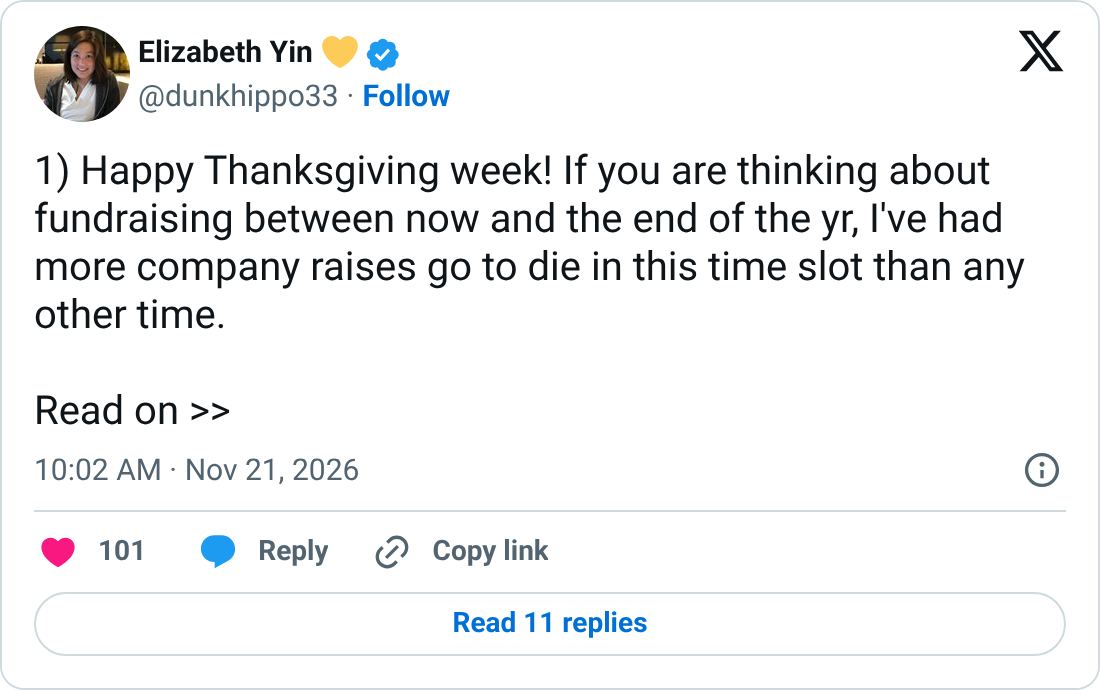
Her whole thread is worth a read, but this is the part I think founders don’t consider:
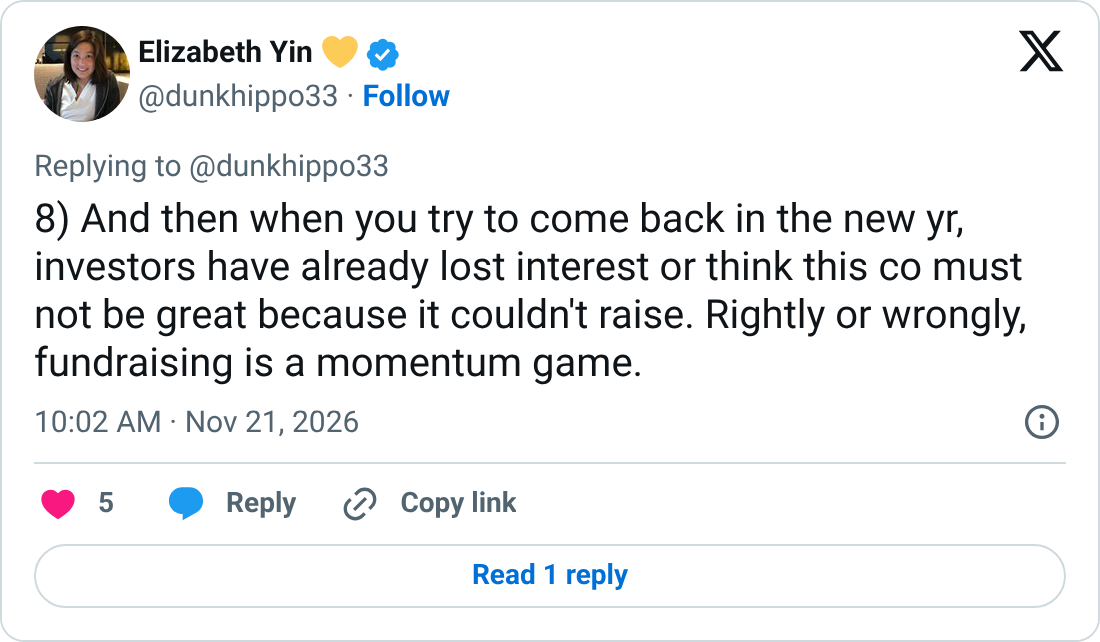
Waiting isn’t neutral once you’ve started. Time builds relationships, but it also kills deals.
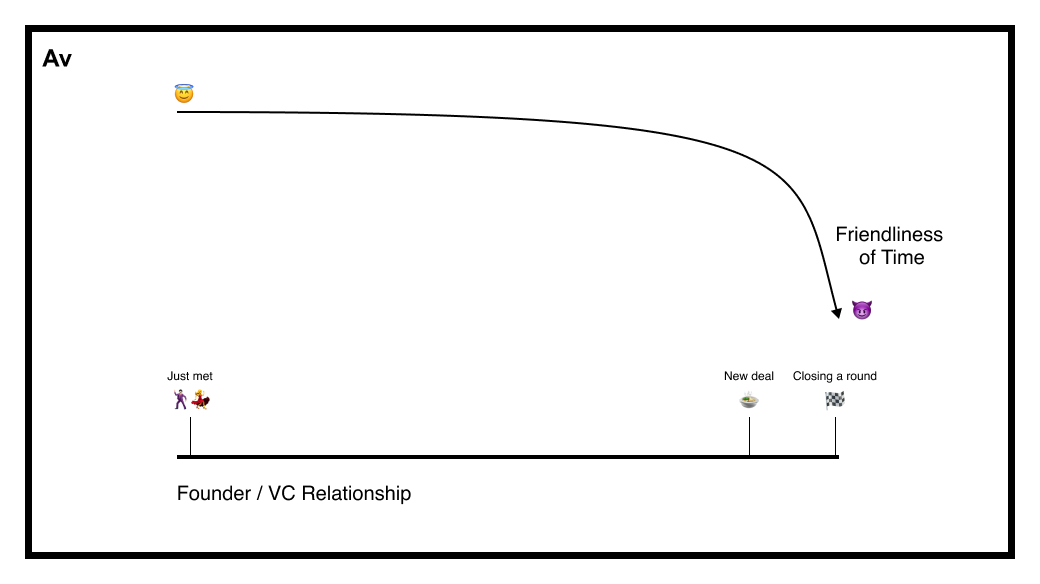
If an investor has been thinking about your deal for six weeks and nothing has changed, there’s no urgency to get it done, and since no one else is doing the deal either they’ll just keep waiting. So January doesn’t give you a clean restart, it gives you a stale one.
Elizabeth’s TLDR is that great companies can raise anytime and good companies need to be strategic about it. I agree, and I’d much rather you plan like a good company than bet on being the exception.
What if you’re already in it?
This came up with a founder back in October. She told me it felt like they’d been fundraising since the day they started. She was talking to angels and she was also talking to firms, trying to close the round out. But her narrative wasn’t locked in and she didn’t have a real process ready to go.
My strong, strong advice to her was this: “Let’s not blend these two raises. Let’s focus on the angels that you can close quickly and don’t need a full round to actually get it done. That angel round will allow you to extend runway to the new year, shift focus to making real business progress till the end of the year, and then set yourself up to organize a really, really good fundraise.”
The distinction matters. An angel round to get you to the new year and a full institutional round are two different raises. Angels can say yes without a lead or a full round behind them. Firms are going to want the locked-in story and the real process. Blending them means running a half-ready process with firms in the worst six weeks of the year, when the angel money was the part you could actually close.
So what should you do?
If you have the runway to hold your breath until January, here’s how I’d use the next six weeks.
-
Don’t kick off a new process now. Unless you’re a screamer deal don’t do it. And if you have to ask “am i a screamer deal?”… you’re not one
-
If you’re mid-process, wrap it up. Close the people closest to yes and raise what you need to get to the new year. Elizabeth also suggests going after hungry emerging fund managers who move fast, which I think is right. My add on to this advice is be ok that wrapping it up could mean $0 if you’re only talking to funds.
-
Extend runway. If not raising now means cash out in Jan, Feb, March, or even April, first thing to do is extend runway. Skipping the deadzone of fundraising does you no good if you’ll start your process with a gun to your head. Find ways to cut costs, raise small amounts of low hanging angel money, or anything in between to get you 4 months come January. 6 would be even better.
-
Sprint the business towards a narrative shift. Traction doesn’t help your raise in a straight line. There’s a point where the story changes and you can say “we’ve got something.” Use December to get there so January’s narrative has something real to hang its hat on. This is especially important to show investors who you’ve talked to before. They need to see progress and a meaningful update.
-
Carve out 10% of your time for prep. The goal is progress in the business, but setting aside 10% of your week to make sure you’ve done real prep work before January will pay dividends. Block a couple hours Friday afternoon for prospecting, deck work, and other things that will get you ready to hit the ground running when it’s time to go.
-
Take “I’m not raising” meetings. If some investors are still getting in touch or you have good organic ways to connect with VCs, you can start a conversation. This can be a safe way to give them an insight into the business before you’re actually raising. The key here is being clear that you’re not raising now. Then in January you can say “really enjoyed meeting you, I’m actually kicking off this raise.”
-
Show up to January ready on day one. January is the most popular time to go out, so your deal gets looked at against the highest volume of deals all year. The founders who did the setup in December are the ones whose calendars fill up first.
This was a pretty easy essay for me to write. I know all the things you should do cold. That said, I can admit it’s way easier to give this advice than it is to take it.
When you’re the founder, waiting six weeks feels like losing and getting closer to cash out can be scary. And I know it’s super easy to tell yourself you could be the exception and get this raise done regardless of what Jason says. I get it..
With all that in mind i’ll still say it…if I were you, I’d play the numbers and wait.
If you need more convincing, think about how big a fire this crisis time will light under your ass for the next 6 weeks. They may be some of your most productive weeks!
Good luck, Happy Thanksgiving and… be chased,
Jason