
Your deck is not an AI input
I’ve been doing narrative design workshops for founders for years, and the questions on that topic used to be pretty consistent.
Do I really need a “Why Now?” slide? Do I need a detailed 5-year financial model? Should the team slide come first or closer to the end? Normal deck stuff.
(btw, my answers are: it depends, it depends, and... it depends)
But recently, especially as I’ve been getting ready for my new Beyond the Deck workshop, the questions have gotten weirder. Not bad or anything, just very 2026 AI-mania weird.
Founders are now asking things like:
Do decks even matter if VCs are just going to ask Claude to review them?
Should my deck be longer now because AI can consume more context?
What models are best for decks?
Should I create a custom version for every investor based on their thesis?
If investors are using AI to summarize decks, should I optimize for the AI reviewer?
I get why these questions are coming up.
AI is touching every part of knowledge work, and fundraising is certainly that. Founders are using AI to write, structure, design, summarize, and personalize their materials. Investors are using it too. At least some of them (but not all... more on that later) are processing decks, drafting memos, researching markets, and speeding up parts of their filtering process with this world changing technology.
So it’s reasonable to ask, “do the old rules still apply?”
Do the old deck rules apply in the AI era?
I know some of you will think of me as a “get off my front yard” boomer when I give my answer.
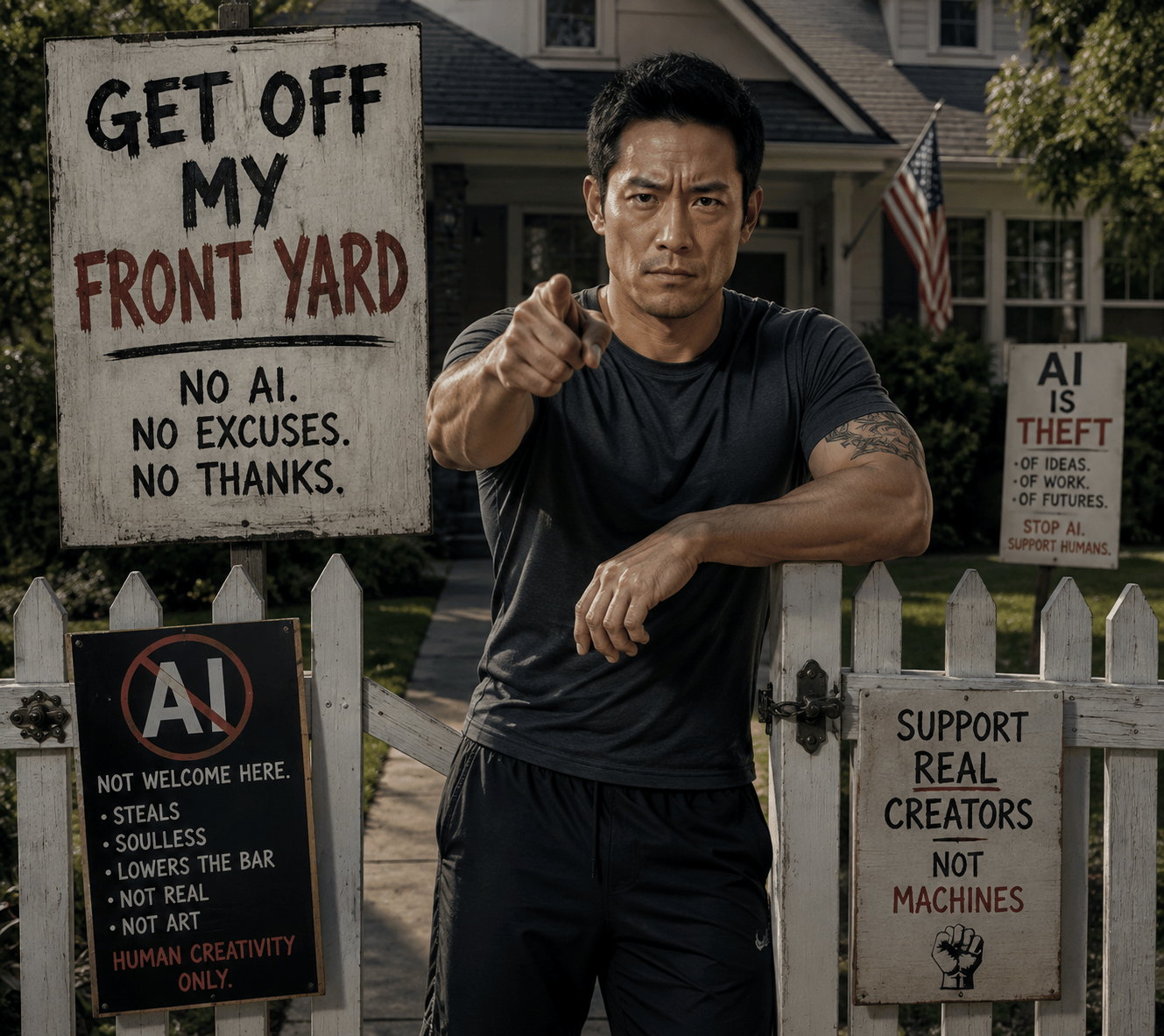
i think i look much younger than this…
But i’m comfortable with that I’m writing this from my little command center with multiple monitors around a Hermes driven, multi-agent setup 🤖, coding agents running in Claude Code and Codex, and way too many paid AI subscriptions for one adult man with no neck beard (not by choice... that’s a genetic limitation). In other words, i’m an AI boi thru and thru <3
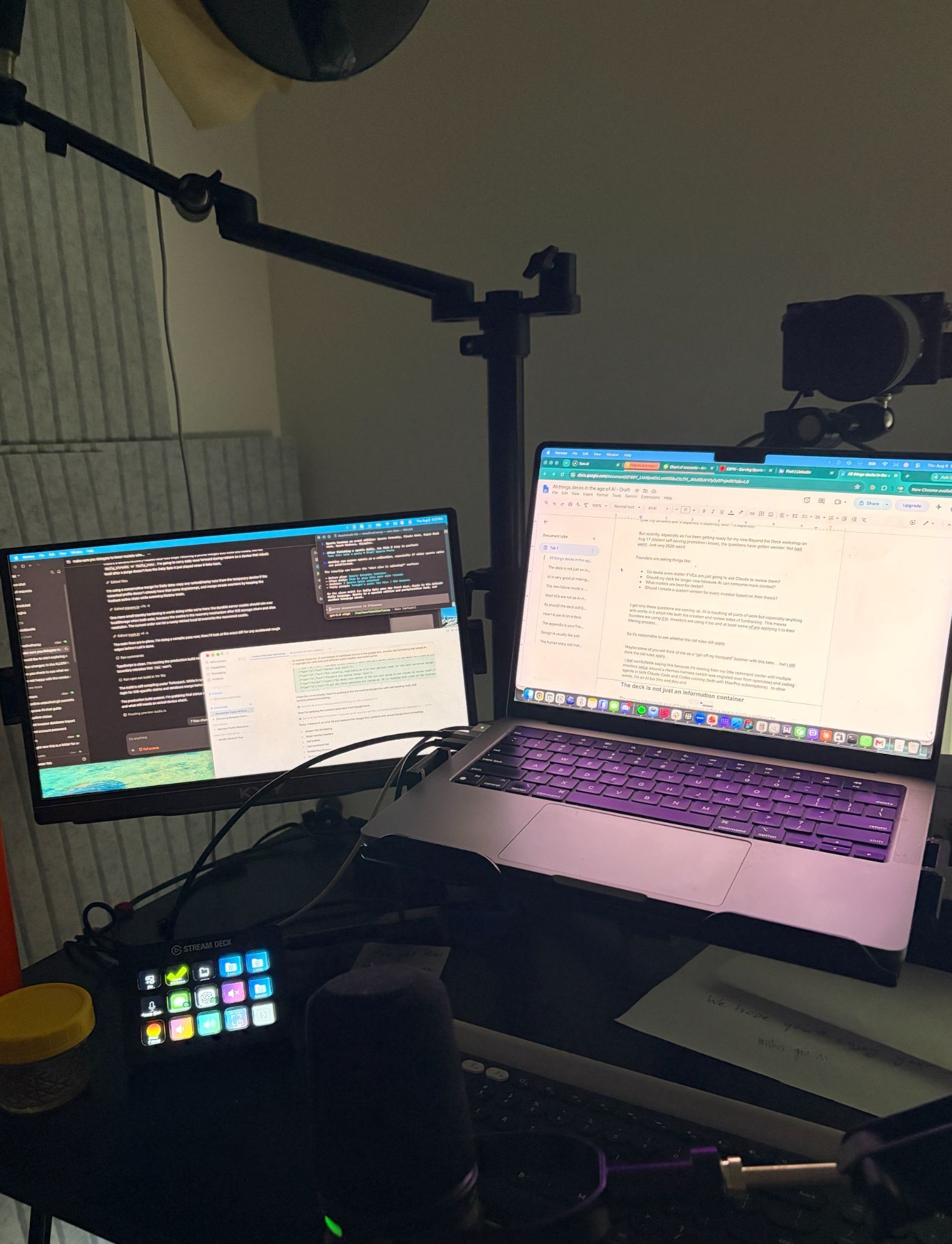
the AI command center view (which is the opposite of my podcast studio view)
So my answer to whether the old rules apply? I think they do. AI changes a lot, but I don’t think it changes the core job of a fundraising deck.
Instead what i think it has changed is AI has made it easier to misunderstand the job of a fundraising deck.
The deck is not just a data source for AI
The premise hiding inside a lot of these questions is that a deck is mainly a container for information that now can be fed into AI.
If that’s true, then the AI-era answer probably is “more,” right? More slides, more detail, more context, more customization, more appendix, more investor-specific language. MOAR.
And I get the instinct. Most of us know that when you give ChatGPT or Claude more context, the answer usually gets better. I’ve written before about “babbling” as one of the great new AI skills. Give the model more raw material, more texture, more examples, and it can often do better work.
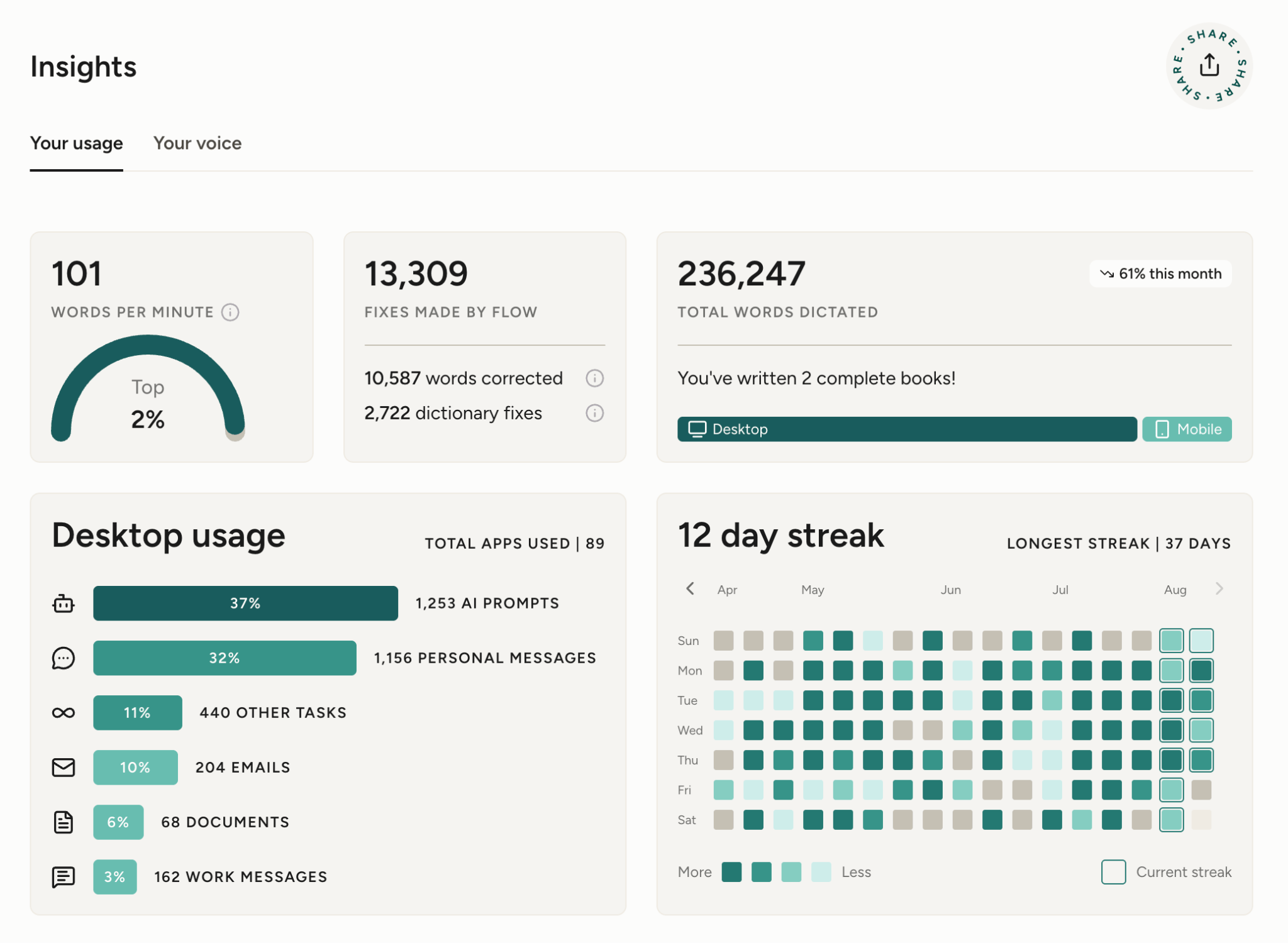
sharing my WisprFlow stats to show you how much i believe in adding more context
So the natural extension of this logic is: if AI can read more, maybe founders should include more.
I wish it were that easy, but that only makes sense if the deck is just a bucket of data.
If not a data bucket, than what is a deck?
A good deck transfers information, sure, but that’s not the only job. The deck is also display of focus and prioritization. It forces you to decide what matters, what order it matters in, and why NOW is a pivotal time for it all to matter!!
I know that constraint is annoying. I’ve watched founders wrestle with it constantly. They want to include the extra bit of detail, that feature, that logo, that side strategy… because what if one of these is the thing that could make it huge? Better yet, what if one of those things is the thing a specific investor would be interested in?
And sometimes those things matter. But the painful work of the deck is deciding which of those things matter most right now, for this audience, in this sequence. That work does not go away because Claude can technically read infinity slides instead of 12.
If anything, AI makes the discipline even more important. Now that it’s so easy to produce content, the natural constraints that used to protect founders from themselves are gone. Decks can become absolute disasters of messy content in an instant.
Remember this: so much of startup success is prioritization and decision making with limited resources. If you can’t demonstrate that ability while creating a deck, it will be very hard for an investor to trust your ability to do it while executing with their money.
The new failure mode is polished slop
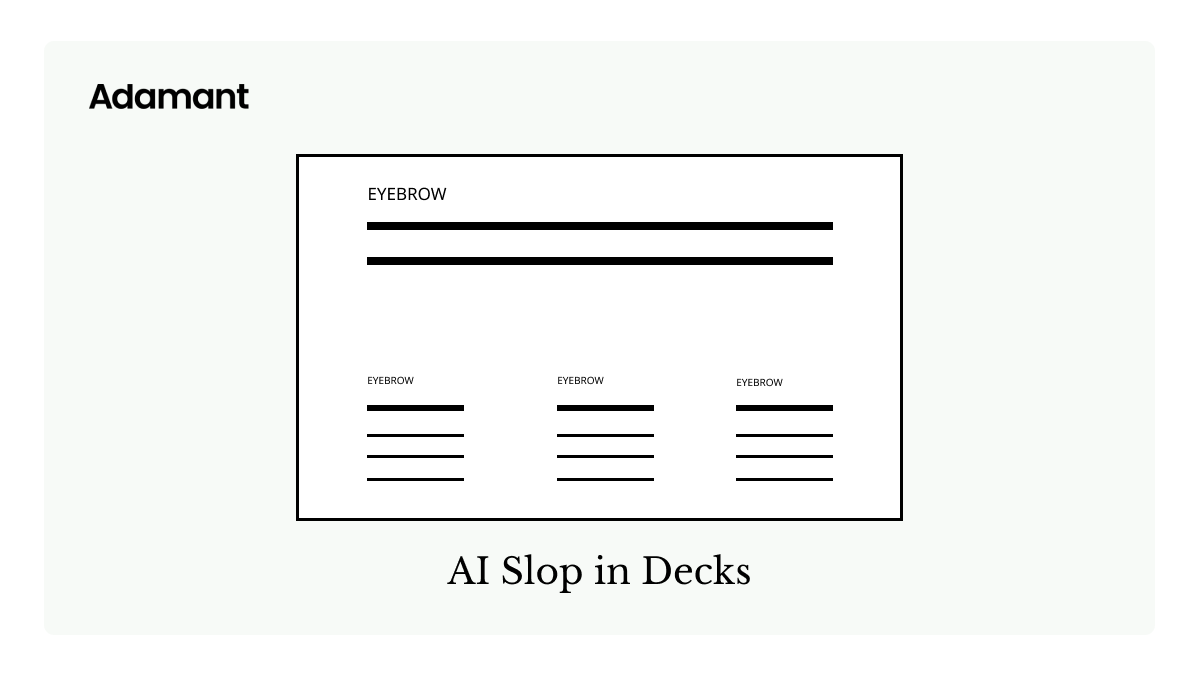
AI slop is everywhere right now. The obvious place is content on social media obviously, but my personal pet peeve is AI UX slop (god, the fucking eyebrows and explainer text strewn all over the place kills me).

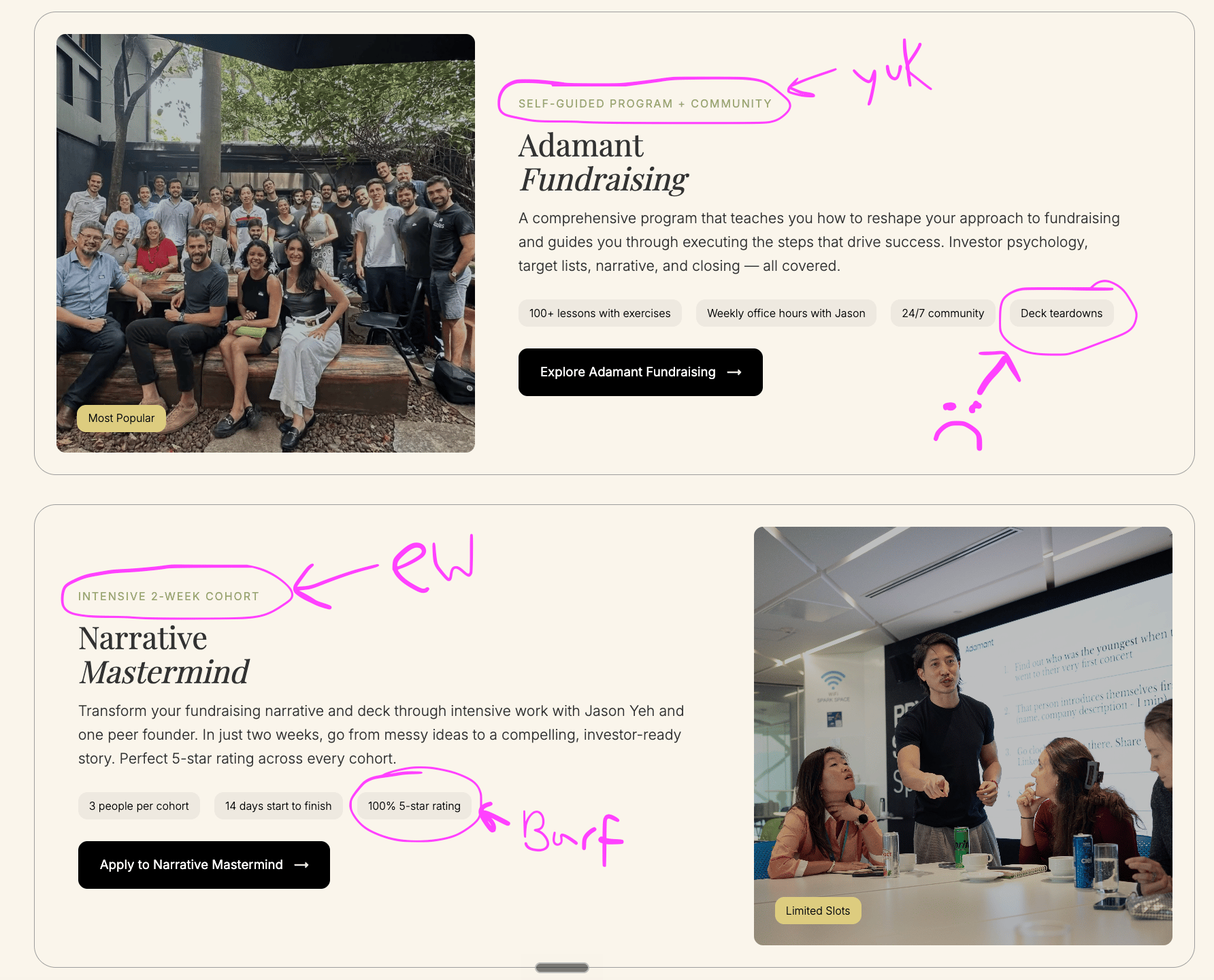
calling myself out here on some of the AI slop design of admnt.com
Decks are an AI slop target too.
You can feel it when a deck has been generated instead of thought through. The words are fine, but a little too copacetically fine. The slides follow a flow that feels forced, templated, and sterile. There are those stupid label eyebrows everywhere (see above). I could go on and on.
The problem is founders are not experts in decks. But I am. And VCs are. This is an issue because, similar to almost every other expert space AI is attacking, the output can look amazing to an outsider while experts see a mess.
This is the weird magic trick of AI. When you are not an expert and it’s hard to get started, AI is incredible. It can take you from 0 to 80% so fast that it almost feels irresponsible not to use it. If you’ve ever leaned on Claude to draft a legal document, tell you what that stomach pain could be, or turn your website into a fundraising deck, you’ve experienced this.
That 0 to 80% jump is real…no arguments here.
The issue is that experts live in the last 20%. A lawyer sees the clause that creates risk for your particular business. A doctor sees the missing detail that changes the recommendation for your situation And in fundraising, someone who has looked at thousands of decks can see when a slide is polished but unconvincing.
That’s the gap founders need to care about.
BTW, it’s not that people will judge you for using AI. It would be incredibly hypocritical to do so. People are going to assume AI touched the process somewhere and be fine with it, but they will judge the slop.
A sloppy AI deck sends a bad signal because it makes you look imprecise. It suggests you were willing to let something that is not an expert in your business fill in the spaces where your own thinking was supposed to be.
Surprise: most VCs are not as AI-native as founders think
There’s another assumption I hear from founders that I’d push on a bit: the idea that VCs are all using AI in some super advanced way.
If you polled VCs and asked, “Are you using AI in your workflow?” I bet the answer would be basically 100% yes.
But that answer is not as informative as it sounds because “using AI” is extremely subjective.
For some investors, yes, it means AI summaries, market maps, memo drafts, diligence support, portfolio analysis, maybe even pretty sophisticated internal tooling. For others, it means Claude has mostly replaced Google Search and they’ve asked ChatGPT to clean up an emails.
Those are not the same thing.
The most technology-forward firms are absolutely using AI to summarize decks, draft memos, research markets, compare companies, and speed up parts of the process. But a lot of VCs are still shockingly old school. I can say that with 100% confidence (and love ❤️) because of the projects I’ve worked on for VCs.
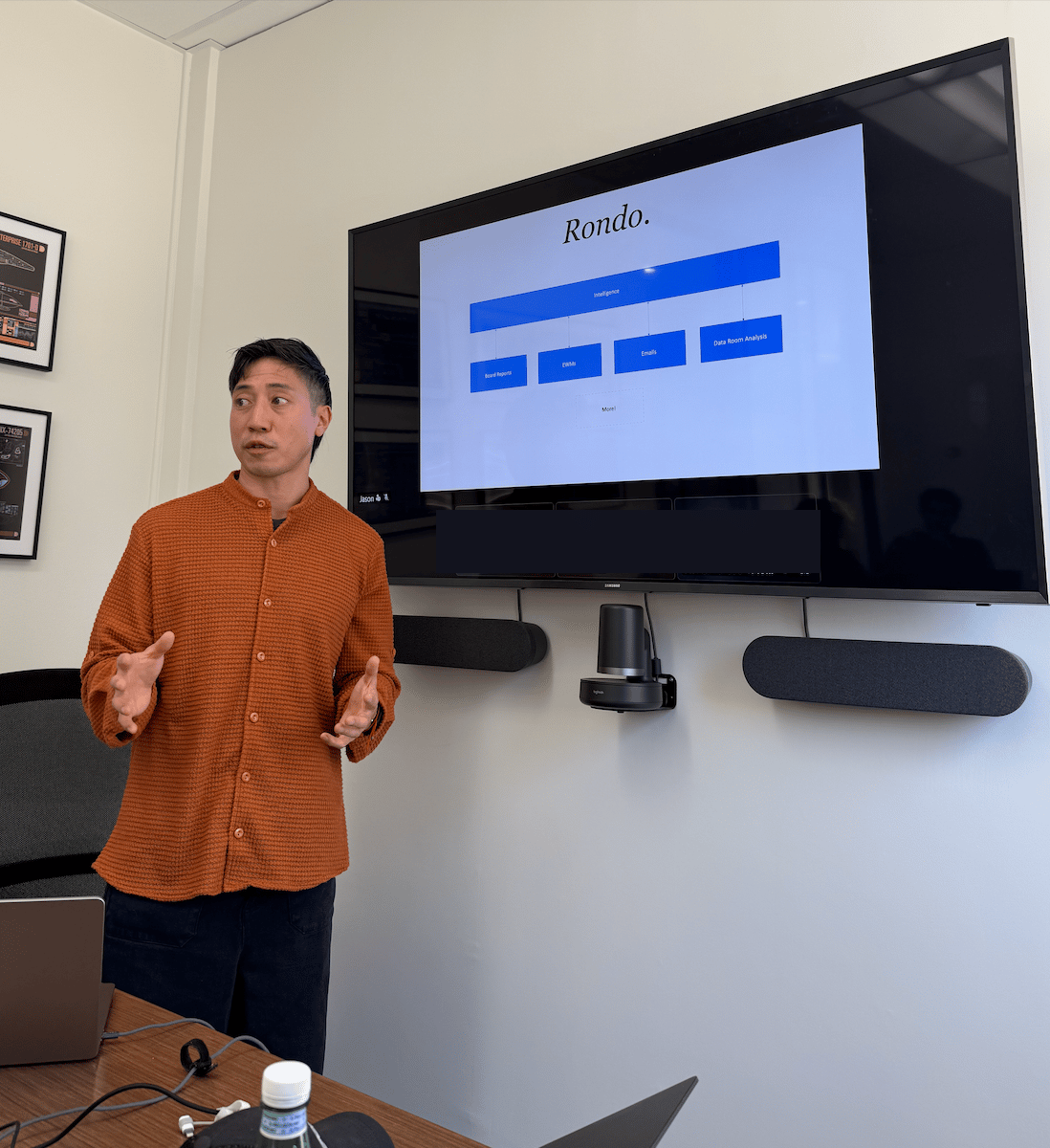
Me running an AI transformation session for a large VC
Most are still skimming the deck themselves, pattern matching against companies they’ve seen before, and then trying to decide whether they care enough to take a meeting or push it through the next conversation.
Why remain old school?
Even when AI is involved, I don’t think most firms are outsourcing conviction to it. They might use it to process information, but venture decisions still rely on a bunch of soft signals that are hard to fully automate. How clearly does the founder think? What do they choose to emphasize? Does the story get stronger when you ask questions? Does the founder seem like they understand the customer in their bones, or did they just say the right words (words that AI might have fed to them)?
(side note: i know there are firms who would argue you can codify the above and are working on it. But they are not the norm)
And btw, VCs have their own story to tell. They need to explain to LPs why their judgment, taste, access, and decision-making are worth paying for. “We uploaded the deck into Claude and did what it said” is not exactly the most inspiring management fee defense.
So yes, assume AI may touch the review process. But don’t assume the deck only needs to satisfy the machine. A human still has to believe it enough to spend social and political capital on you.
So should the deck still be short?
Yes, but not because 10-12 slides is some sacred law.
I’m sure there are situations where the right deck is a little longer or a little shorter. I don’t care about the exact number as much as I care about the discipline behind it.
The reason I still push founders toward concise decks is that constraints force better thinking and creativity. If you only have a limited amount of space, you have to decide what the actual argument is. You can’t hide behind every possible supporting detail and supplement with little information eyebrows (barf) all over the place. You can’t include six versions of the same point because you’re scared one won’t land. You have to choose.
That choosing is valuable even if an AI eventually reads the deck.
I’d rather see a founder create a tight main deck with a clear appendix strategy than turn the main deck into a junk drawer of every semi-relevant thought they had while thinking through their fundraise because they think Claude will distill it the right way for them.
The main deck is the story that spoon feeds exactly what you want them to feel. It is not a choose your own adventure book. This is the advice i gave founders before ChatGPT ever launched. It’s more relevant than ever.
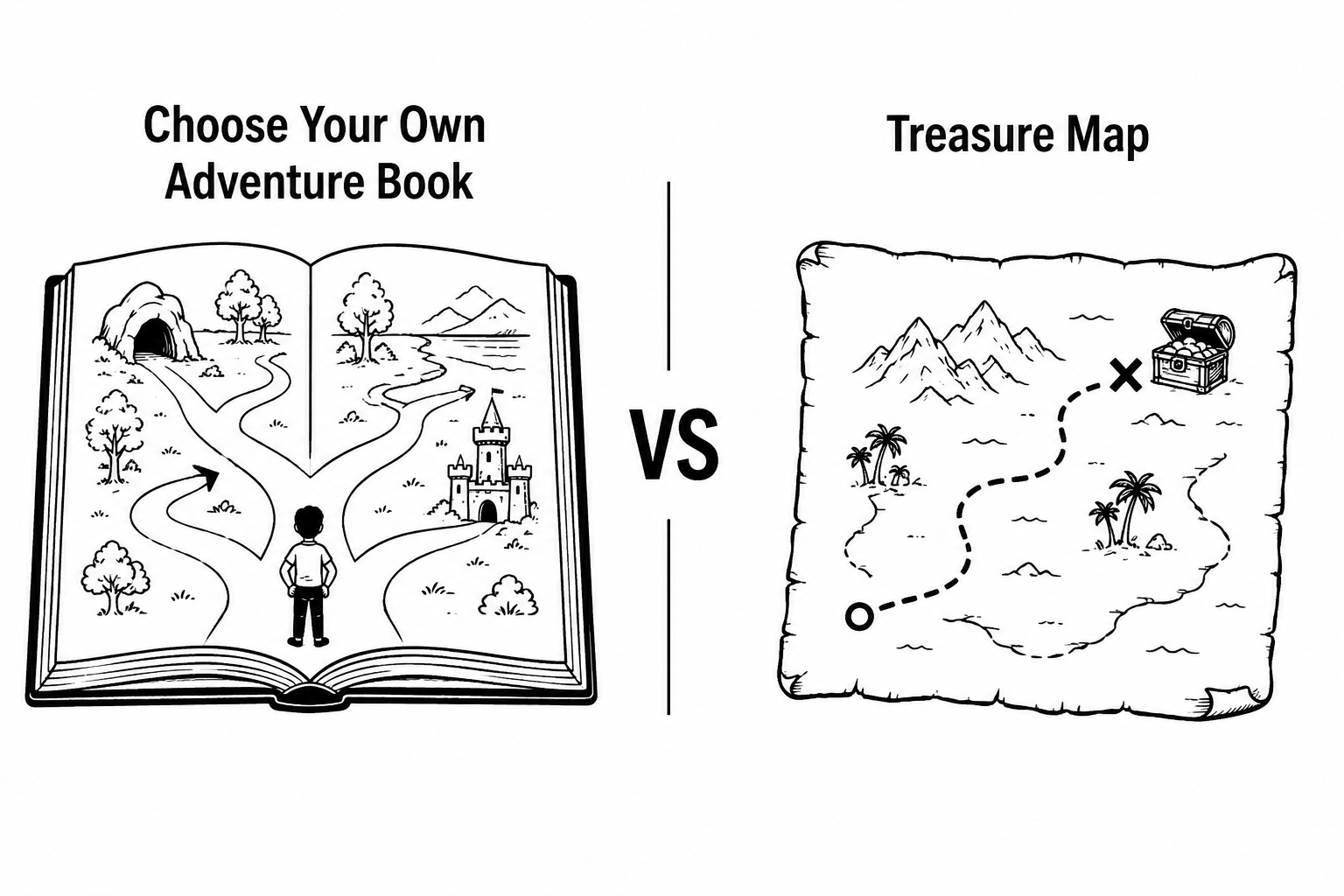
the comparison i give for founders on decks (don’t be a choose your own adventure)
The work is still the work
AI will get better. I’m very open to the possibility that some of this advice changes as the tools improve and as investors change their workflows. Maybe the classic deck gets pushed further out of the process over time. Maybe founders send different artifacts. Maybe AI-native review creates a totally new fundraising package.
That’s ok. I’m not religious about the format.
But right now, fundraising is still about creating belief in a team and a business. The deck is one of the first artifacts that shows how you think. It shows whether you can make hard choices, whether you understand what matters, and whether you can turn a complicated company into a story someone else can carry into a partner meeting.
So use AI. Assume investors may use it too. But don’t let that trick you into thinking AI has eliminated your work.
Next week, I’ll share how I’d actually use AI in the deck process without letting it turn the story into polished slop.
Be chased,
Jason

.png)
.jpg)